For Salons, Spas, and Wellness Studios

Your salon already runs on paper. Add the half that's been missing.

The booking diary, the formula card, the client folder. They don't go away. They get a partner that remembers, reminds, and reconciles.

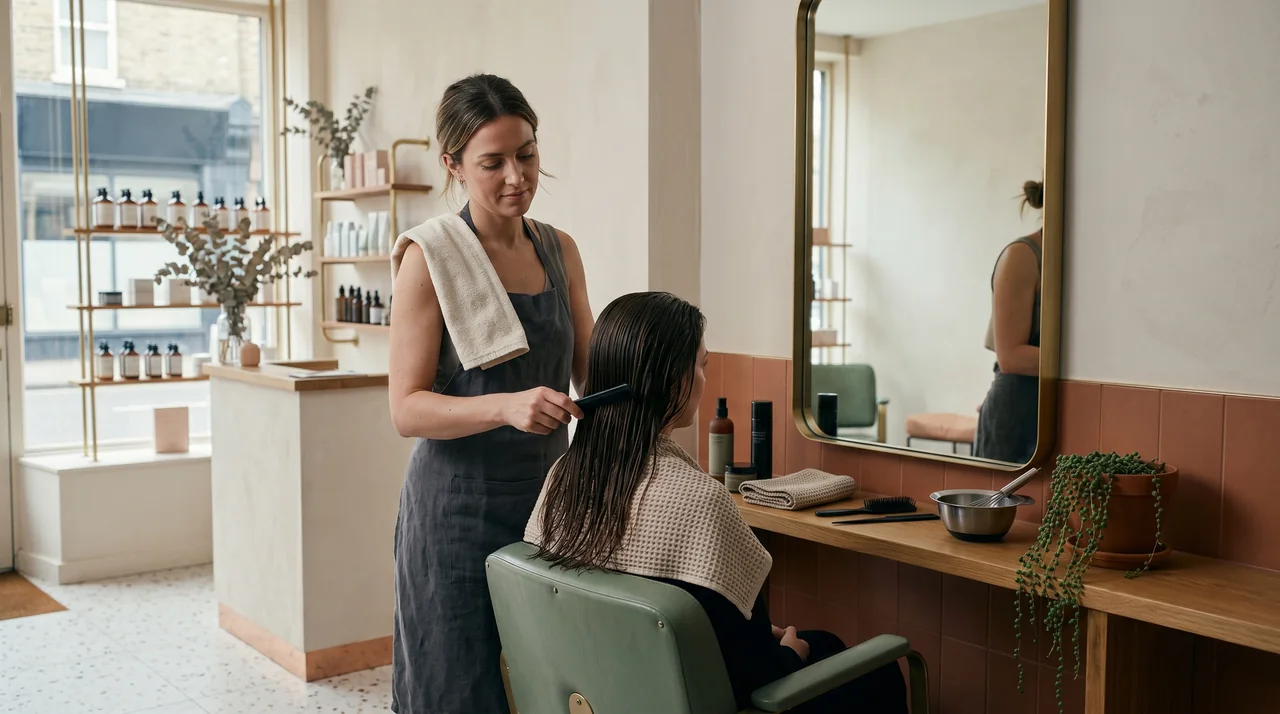
Stylist mid-service in a boutique salon with terracotta tile and oak shelving

The two systems

Three workflows. Three pair cards. Paper on the left, portal on the right.

The argument is not that one replaces the other. The argument is that the salon has been keeping the left column for years and writing the right column on a different desk.

Pair 01 / 03 · The booking
Paper
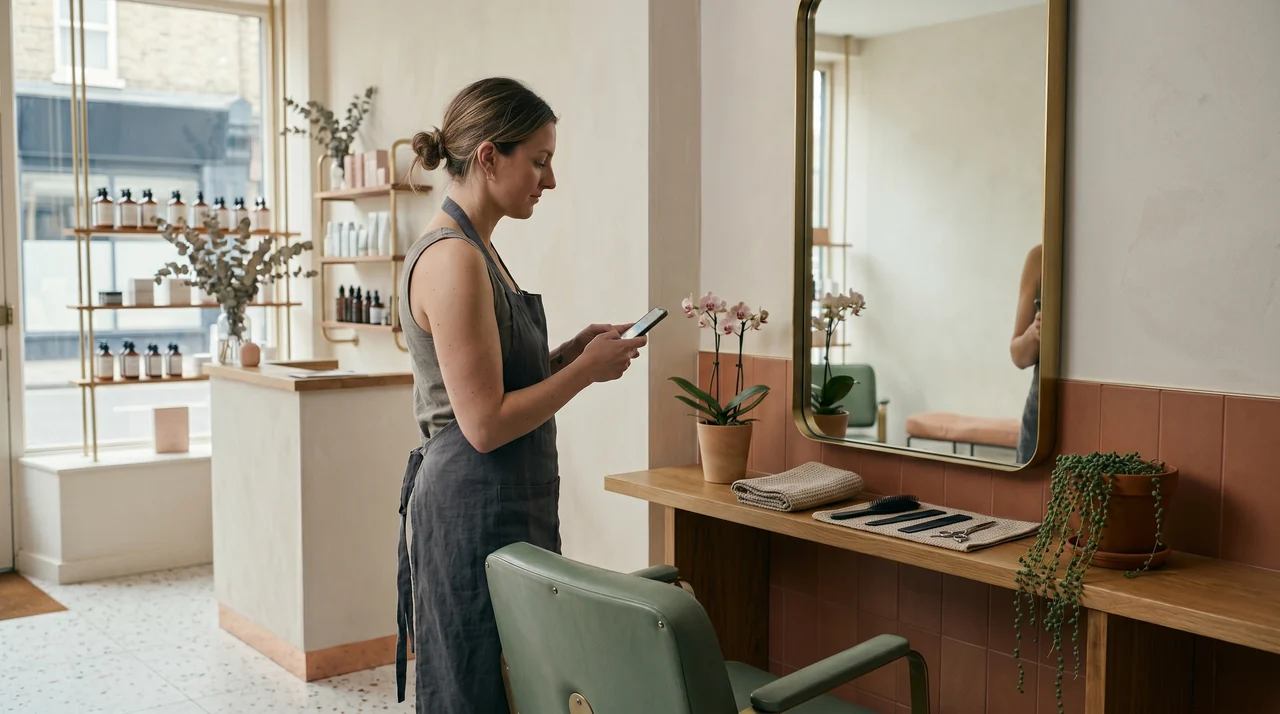
The chair is empty for the next 20 minutes. The stylist's phone tells her why. A no-show, a last-minute confirmation, a reschedule request she hasn't read yet.

Portal

The booking diary keeps its place. The portal handles the reminders.

Clients book and reschedule themselves through your branded portal; the system fires SMS and email reminders 48 and 2 hours before appointment. No-shows drop. Your front-desk diary stays the reference of record. The portal just stops it being the only system that knows what's happening.

SMS + EMAIL · 48H / 2H BEFORE · CLIENT-BOOKED RESCHEDULE
Pair 02 / 03 · The client card
Paper

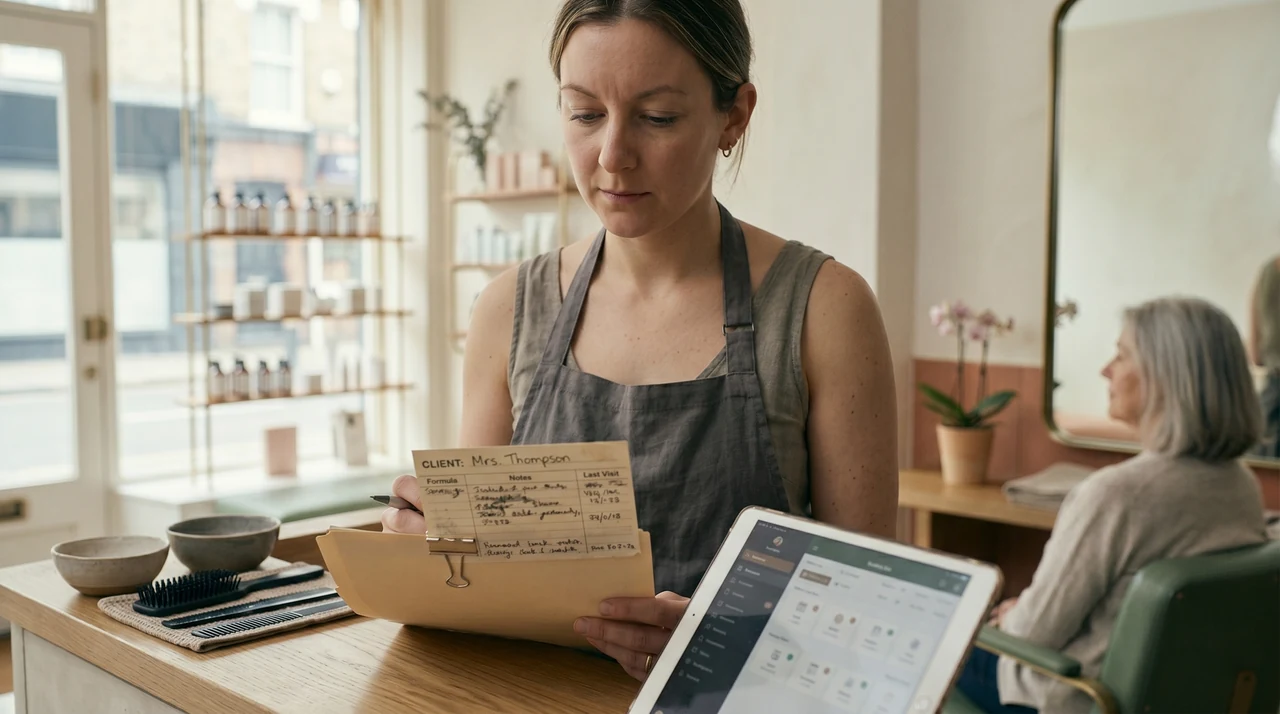
Mrs. Thompson's card has been on the desk shelf for nine years. Formula, last visit, the note about her sensitivity to ammonia. The card is irreplaceable.

Portal

Keep the card. The portal mirrors what the card knows.

When a stylist updates the formula on the paper card, she logs the same update in the client profile. Formula, retail product used, treatment notes, photos. The next stylist on shift opens the profile and reads the card without picking up the folder. The card stays the tactile record; the profile becomes the searchable one.

FORMULA · NOTES · LAST VISIT · RETAIL HISTORY · PHOTOS
Pair 03 / 03 · The dual record
Paper

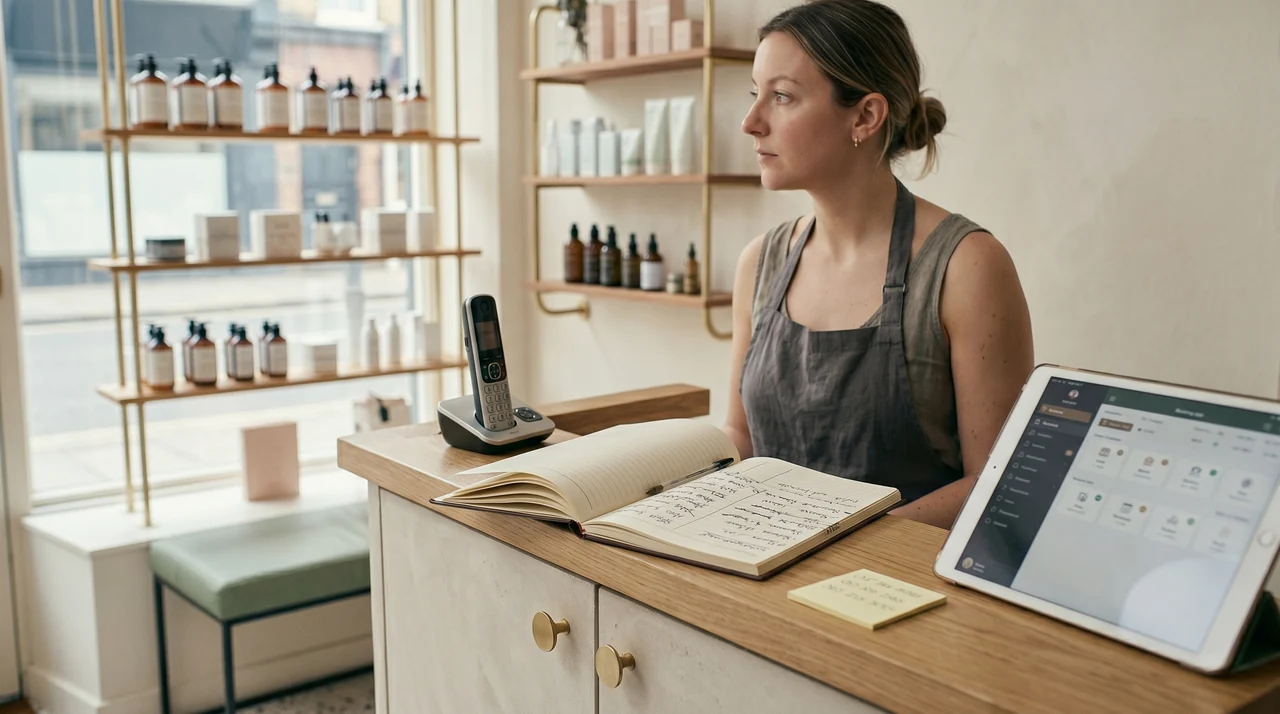
The notebook is open. The iPad is open. Both are in active use. The question is whether they agree on what happened today.

Portal

One source of truth, in two formats.

End of day, the notebook reflects what the booking grid recorded; the booking grid reflects what was checked off in the notebook. Retail rung at the counter updates inventory; commission splits to the stylist who performed the service. The two formats stay because they serve different moments in the day. The portal makes them a single record, not a daily reconciliation problem.

BOOKING · INVENTORY · COMMISSION · DAILY CLOSE

Three pairs · One ledger · Paper and portal, in sync

Want to see the technical depth behind our solutions? Read our case study

Ready to stop keeping two ledgers?

Keep the paper. Add the partner.